Jícama
Jícama is a tropical herbaceous crop that grows best in the 20–30°C range with 1300–1700 mm of rain, cropping year after year as a perennial.
How it grows
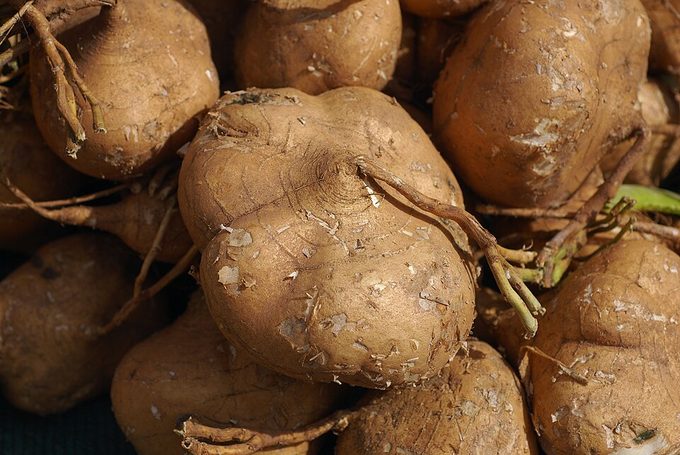

Jícama is a root that swells below ground; only the leafy top shows above the soil.
Where Earth's climate suits jícama
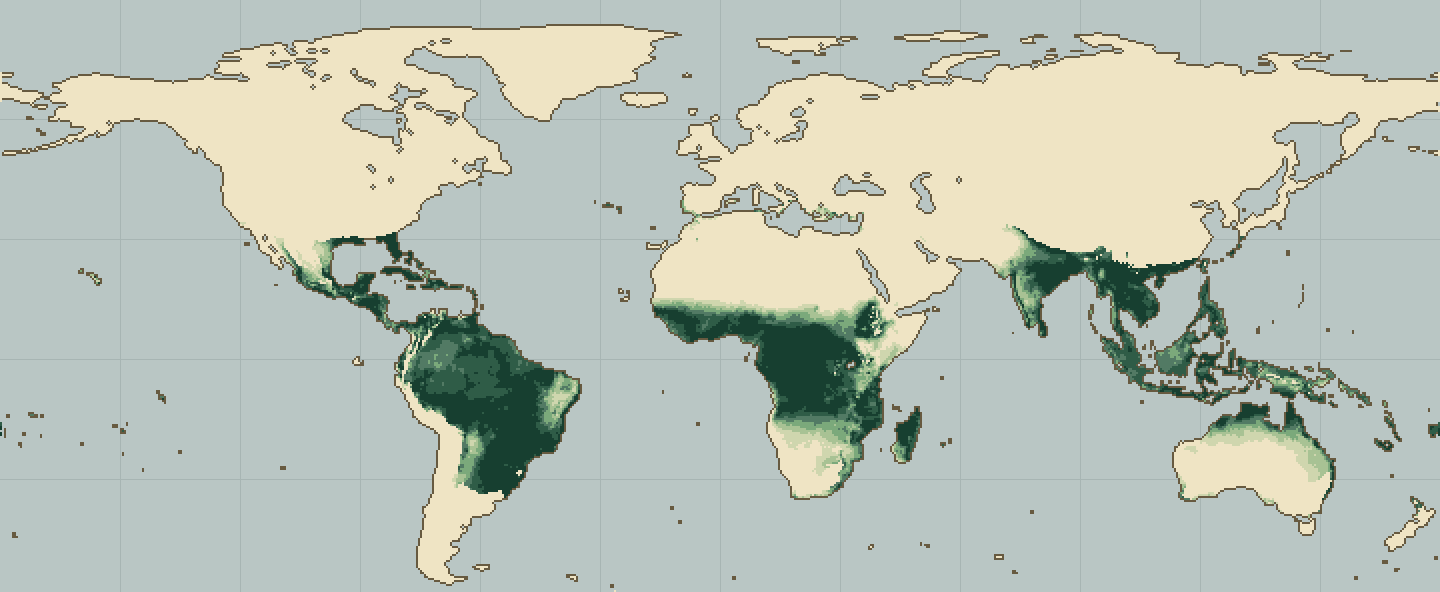
Climatic suitability only — scored for every 0.5° of the planet from this crop's temperature and rainfall tolerances (FAO EcoCrop) on AgroClim 1991–2025 normals (AgERA5 temperature, CHIRPS/ERA5 rainfall). It shows where the rain-fed climate permits the crop, not where it is grown today; irrigation lets many crops thrive in drier country than the map suggests (California, Egypt, the Indus and Nile).
Who grows it — and where the climate merely allows it
Climate envelope · FAO EcoCrop
Deep bar = optimal range; pale bar = absolute tolerance. Beyond the pale bar the crop fails. Latitude tolerance ±25° · soil pH 4.3–8.
Growing calendar & hazards
A perennial: once established it crops year after year, flushing and fruiting with the local wet and warm seasons rather than on a single annual calendar.
- Cold & frost. A frost-sensitive crop: temperatures near or below freezing damage or kill it, so it is confined to frost-free seasons and warm climates.
- Drought. Relatively drought-hardy, but a failed rainy season still cuts yield sharply where irrigation is absent.