Maize
Maize — corn — is the highest-yielding of the great grains and the most widely grown crop on Earth. A warm-season grass from the Americas, it turns long summer days and deep summer rain into more calories per acre than anything else, anchoring the US Corn Belt and spreading across Africa as a staple.
How it grows
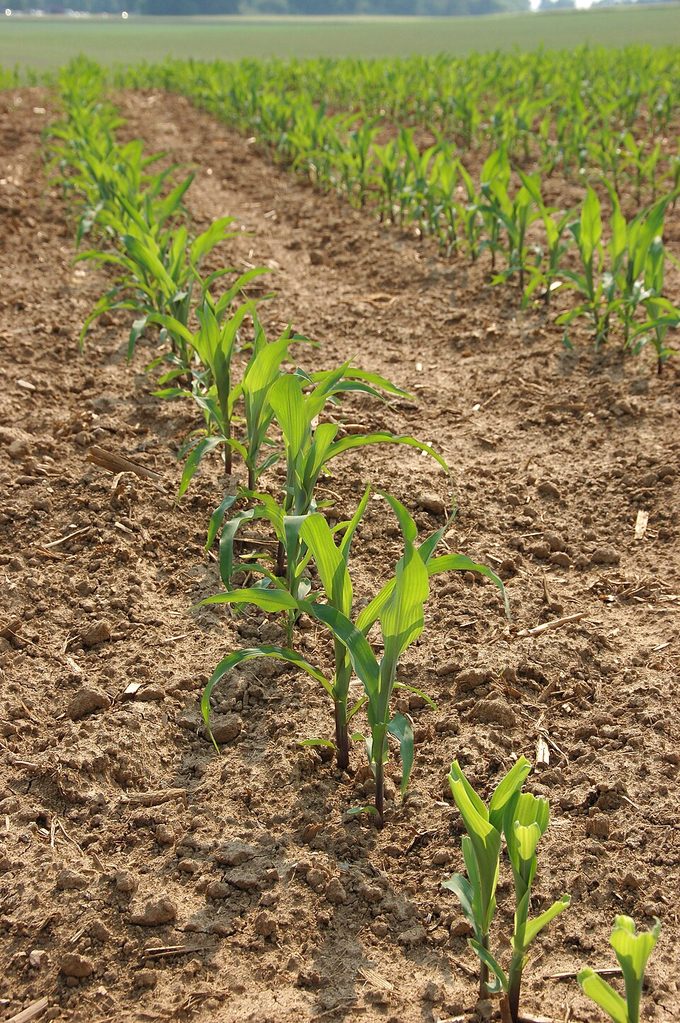


Maize grows on a tall, upright stalk, the ear held clear of the ground.
What it’s worth to grow
Farm-gate value = the price farmers are paid per kilogram (FAOSTAT producer prices, median of 643 positive country-year observations spanning 2018–2024). It tracks how costly and labour-intensive a crop is to grow — almonds and vanilla command a premium; potatoes and cereals are cheap staples.
Where Earth's climate suits maize
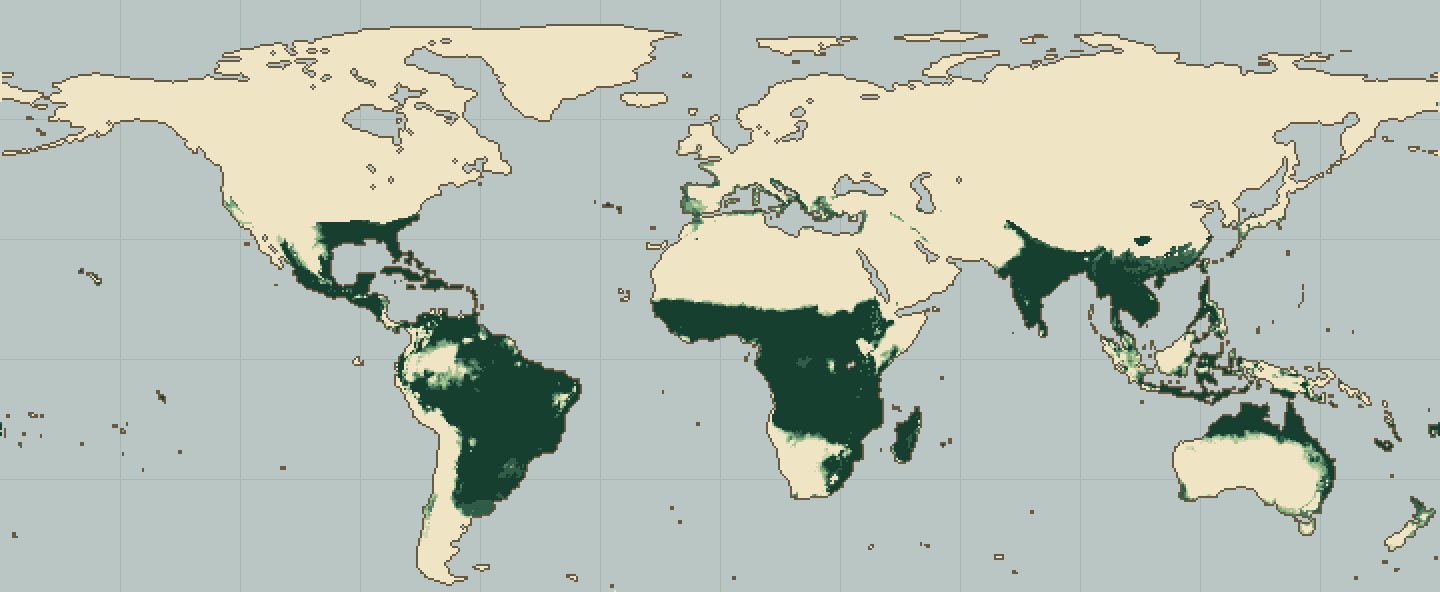
Climatic suitability only — scored for every 0.5° of the planet from this crop's temperature and rainfall tolerances (FAO EcoCrop) on AgroClim 1991–2025 normals (AgERA5 temperature, CHIRPS/ERA5 rainfall). It shows where the rain-fed climate permits the crop, not where it is grown today; irrigation lets many crops thrive in drier country than the map suggests (California, Egypt, the Indus and Nile).
Who grows it — and where the climate merely allows it
The climate where it grows
— mean monthly temperature ▍ monthly rainfall — averaged over the actual growing areas (the suitable cells) inside each country, so it reflects where the crop is really grown, not the national average. AgroClim 1991–2025 normals. The 🌧 badge is the last 3 months’ rainfall as a percentage of the 1991–2020 CHIRPS normal (through 2025-12) — the current drought/deluge signal.
Climate envelope · FAO EcoCrop
Deep bar = optimal range; pale bar = absolute tolerance. Beyond the pale bar the crop fails. Latitude tolerance ±48° · soil pH 4.5–8.5.
Growing calendar & hazards
Sown after the last spring frost into warming soil, maize races through the long days of summer and is harvested in autumn — a single frost-free warm season from planting to grain.
- Drought at silking. The crop is most fragile as it flowers; drought or heat during silking aborts the ears — the signature of US Corn Belt failures.
- Heat. Days much above ~35°C during pollination cut kernel set.
- Frost. Frost-sensitive at both ends: a late spring or early autumn frost ends the crop.