Rice
Rice is the staple of the warm, wet tropics and the great river deltas of monsoon Asia. Unlike any other cereal it is grown standing in water, so it follows the flood: the Ganges, Mekong and Yangtze basins feed half of humanity from paddies.
How it grows
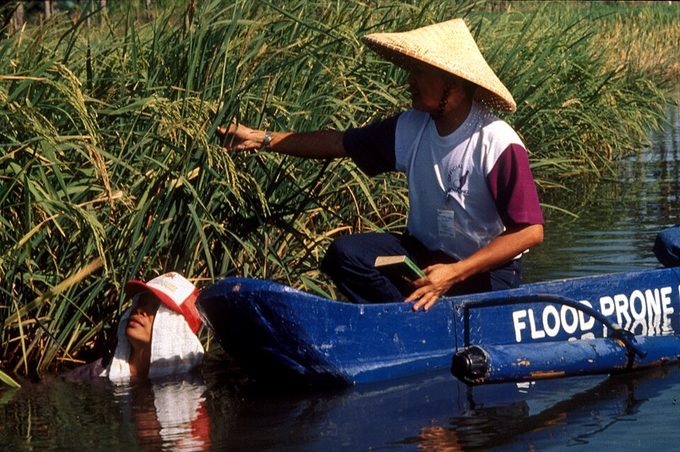

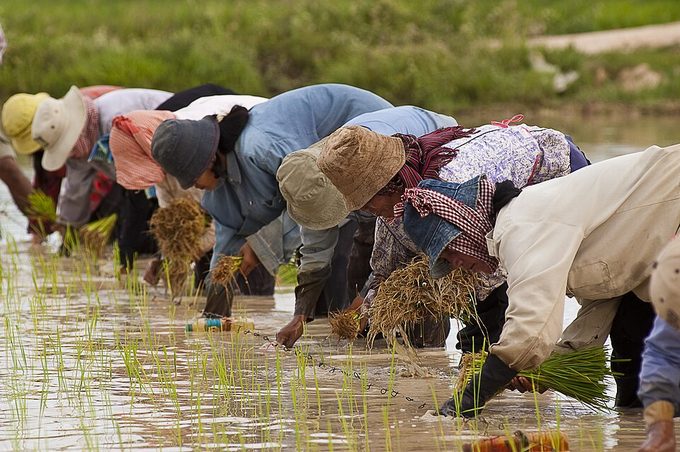

Rice is the grain packed into the seed-head atop a slender stalk.
What it’s worth to grow
Farm-gate value = the price farmers are paid per kilogram (FAOSTAT producer prices, median of 414 positive country-year observations spanning 2018–2024). It tracks how costly and labour-intensive a crop is to grow — almonds and vanilla command a premium; potatoes and cereals are cheap staples.
Where Earth's climate suits rice
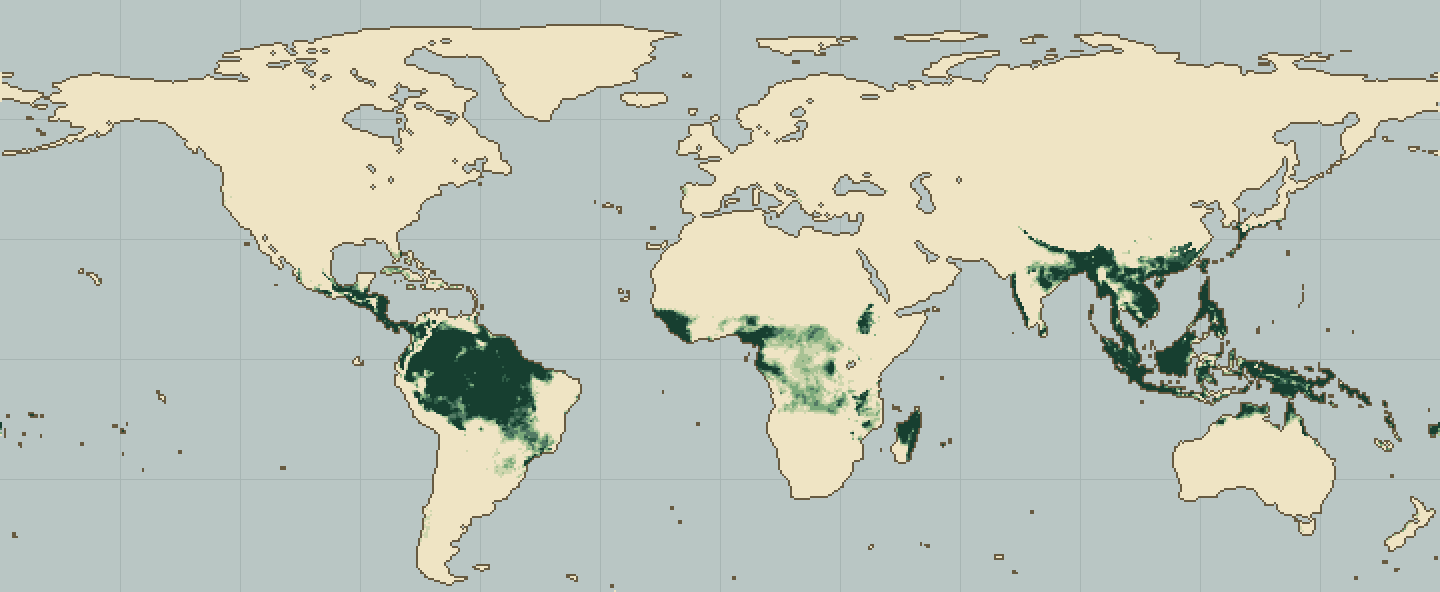
Climatic suitability only — scored for every 0.5° of the planet from this crop's temperature and rainfall tolerances (FAO EcoCrop) on AgroClim 1991–2025 normals (AgERA5 temperature, CHIRPS/ERA5 rainfall). It shows where the rain-fed climate permits the crop, not where it is grown today; irrigation lets many crops thrive in drier country than the map suggests (California, Egypt, the Indus and Nile).
Who grows it — and where the climate merely allows it
The climate where it grows
— mean monthly temperature ▍ monthly rainfall — averaged over the actual growing areas (the suitable cells) inside each country, so it reflects where the crop is really grown, not the national average. AgroClim 1991–2025 normals. The 🌧 badge is the last 3 months’ rainfall as a percentage of the 1991–2020 CHIRPS normal (through 2025-12) — the current drought/deluge signal.
Climate envelope · FAO EcoCrop
Deep bar = optimal range; pale bar = absolute tolerance. Beyond the pale bar the crop fails. Latitude tolerance ±55° · soil pH 4.5–9.
Growing calendar & hazards
Across monsoon Asia rice is transplanted with the arrival of the rains and harvested in the drier months; with irrigation, two or even three crops a year are taken from the same field.
- Drought & erratic monsoon. A late or weak monsoon leaves paddies dry at transplanting and slashes the harvest.
- Flood & submergence. Too much water drowns all but flood-tolerant varieties; deltas also face saltwater intrusion.
- Heat at flowering. Nights above ~26°C and hot days at flowering leave grains empty.